OpenAI Unveils Codex Micro: Branded Smart Keyboard
OpenAI launches the $230 Codex Micro, a limited‑run RGB keyboard that lights six keys with thread status, lets users tap to open AI windows, and shortcuts.

Key Takeaways
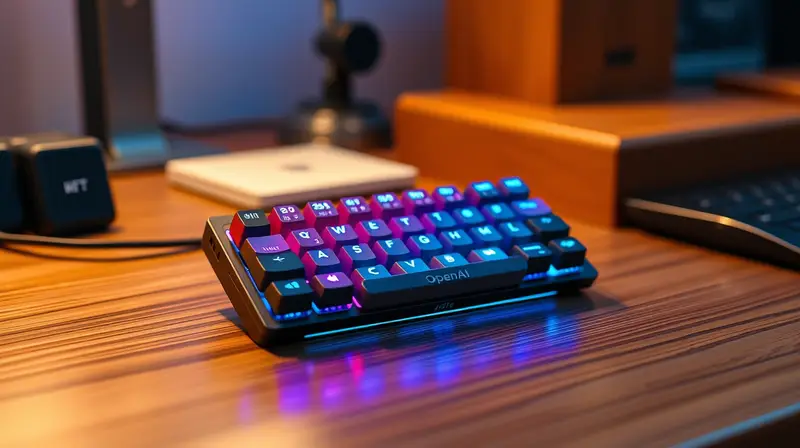
OpenAI has introduced its first branded hardware, the $230 Codex Micro, a limited‑run RGB keyboard built with Work Louder, featuring the tagline “You can just build things” referencing its Super Bowl ad.
The device features six frosted keys that display live status of up to six Codex AI threads, cycling colors from white (idle) to blue (thinking) to green (completed), and flashing amber or red for feedback or errors.
Users can tap a lit key to open the corresponding Codex window, and can remap the six default function buttons or replace them with 32 included keycaps. Five additional function sets can be programmed for general shortcuts.
The launch underscores OpenAI’s broader ambition to move into hardware, a move that follows earlier collaborations with former Apple designer Jony Ive and LoveFrom, and comes amid ongoing legal disputes involving Apple’s trade‑secret lawsuit. The limited‑run partnership accepts orders only while supplies last, and shipping is expected shortly after purchase. It signals OpenAI’s intent to shape future AI peripherals.
Potential Impact Areas
- Faster monitoring of multiple AI agents directly from a desktop keyboard, reducing context switching.
- New workflow for developers who rely on Codex to visualize thread states without opening a laptop.
- Opportunity for third‑party integrations that can leverage the colored key feedback.
- Limited‑run nature may create scarcity, driving early‑adopter interest and shaping expectations for future AI‑hardware products.
Our Insight
The Codex Micro illustrates OpenAI’s shift from pure software to tangible AI accessories. For users, the visual key feedback could streamline workflow, but the $230 price and limited availability restrict broad adoption.
Developers gain a novel hardware interface, yet the dependence on OpenAI’s Codex platform ties them to a proprietary ecosystem, raising lock‑in concerns.
The collaboration with Work Louder shows openness to third‑party design, but the uncertain long‑term supply and Apple’s lawsuit introduce legal and production Risks.
While the device signals ambition, its impact will depend on how well OpenAI can scale hardware partnerships and integrate them with its services.
Early adopters may influence future designs, but the success hinges on delivering reliable hardware that complements, rather than complicates, the AI assistant experience.
External Credit
Original source: arstechnica.com
Full credit goes to the original publisher. We link to this content for informational and commentary purposes only.